

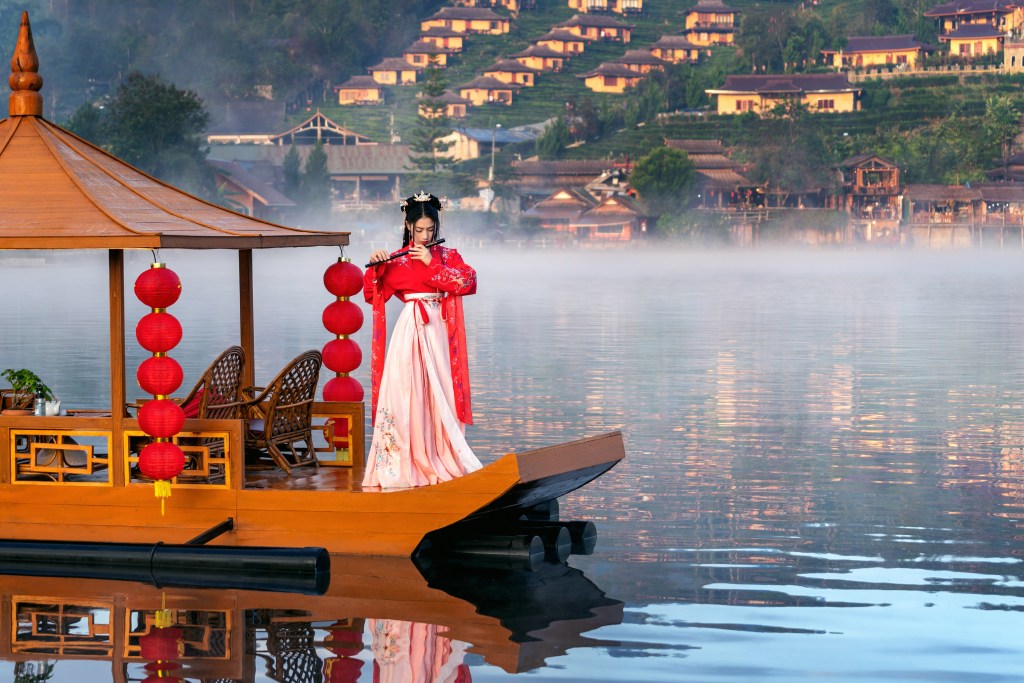
China’s traditional festivals play a vital role in driving cultural tourism by blending centuries old heritage with modern travel dynamics. During the eight day Spring Festival holiday in 2025, tourism in China reached record highs. The Ministry of Culture and Tourism reported 501 million domestic trips, marking a 5.9 percent increase compared to the previous year. Tourist spending soared to 677 billion yuan, a 7 percent rise. Passenger travel peaked at 2.3 billion trips across all transport modes. Cross border travel also increased, reaching 14.37 million trips, a 6.3 percent year-on-year gain, including 958 000 trips by foreign tourists. These statistics underscore the festival’s significance not only as a cultural cornerstone but also as a powerful economic driver for tourism and hospitality industries (cited from Xinhua News Agency Update February 5 2025).
Beyond sheer volume, cultural experiences during the Spring Festival drew visitors into immersive traditions. Urban museums such as the Palace Museum in Beijing, Shaanxi History Museum in Xi’an, and Sanxingdui Museum in Sichuan saw heightened attendance. At the same time elaborate light displays featuring fish shaped lanterns in Huangshan City and Yingge dance performances in Shantou City upheld intangible heritage celebrated by many travelers (cited from CGTN report February 5 2025).
Other festivals similarly catalyze tourism activity across China. During the Mid Autumn Festival holiday in 2024, domestic trips reached 107 million, up 6.3 percent compared to the same period in 2019. Cross border trips during that period climbed to 5.26 million. Cultural tourism activities such as viewing lantern fairs making moonlit boat rides and experiencing Hanfu garden tours were especially popular among young travelers, triggering surging consumer interest in heritage related experiences (cited from Xinhua report September 19 2024).
Data from travel platforms highlights this cultural tourism momentum. During Mid Autumn Festival, searches for moon viewing tours increased by 61 percent and lantern viewing tours spiked by 267 percent year on year. In Shanxi Province car rental and self driving bookings increased by 16 percent compared with the Dragon Boat Festival holiday. The rise in culturally themed tourism demonstrates how integrating heritage with modern travel experience expands consumption and reinforces cultural preservation (cited from Global Times September 2024).
The Dragon Boat Festival is another prime example of cultural heritage activating tourism. In 2025 during this festival holiday, passenger trips nationwide reached approximately 657 million, a 3 percent year-on-year increase. Daily domestic trips averaged 219 million and road travel accounted for 600 million short distance journeys. Cross-border trips grew 2.7 percent to reach 5.9 million. Box office revenue also surged to 460 million yuan exceeding the previous year’s 384 million yuan, with iconic blockbusters like Mission Impossible generating significant share of ticket sales (cited from Reuters June 3 2025).
In Beijing during the Dragon Boat Festival weekend cultural tourism offerings rose significantly. The capital hosted more than 1700 cultural tourism events including dragon boat carnivals intangible heritage markets and Hanfu workshops. This resulted in 8.21 million tourist visits, a 5.4 percent increase year-on-year, generating 10.77 billion yuan in tourism revenue (cited from government cultural tourism development data June 2025).
The Spring Festival also triggered remarkable demand for intangible cultural heritage tours. Searches for such experiences increased by 133 percent compared to the previous month, with inbound travel orders rising 203 percent year-on-year. Cultural offerings like lantern festivals temple fairs folk music dance performances and traditional dress photoshoots became central to travel itineraries across regions like Anhui Jiangxi and Sichuan (cited from Fliggy and Ctrip data January 2025).
These traditional festivals serve not only as remarkable travel opportunities but as platforms for showcasing cultural identity and driving economic growth through hospitality and tourism. Festivals like Spring Festival Mid Autumn Festival and Dragon Boat Festival attract hundreds of millions of domestic and international travelers, fuel revenue growth for museums performances and local businesses and stimulate diverse tourism products. Integrating cultural heritage experiences into travel itineraries elevates the tourism industry while ensuring that age old traditions continue to thrive in contemporary contexts.
 Vertel Corporation