

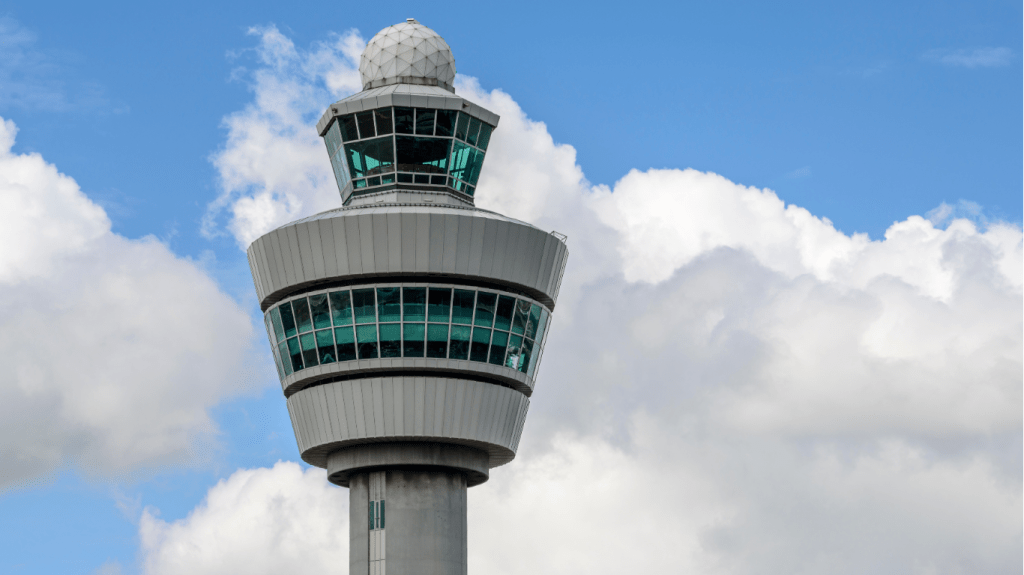
Artificial intelligence is increasingly transforming air traffic management systems by improving safety efficiency and capacity in the aviation sector. As global air travel demand continues to grow, traditional air traffic control methods face challenges in managing complex flight patterns and minimizing delays. AI technologies such as machine learning computer vision and predictive analytics offer powerful tools to optimize traffic flow enhance situational awareness and support decision making for controllers.
According to the International Air Transport Association’s 2024 report, global air traffic is expected to reach 9.7 billion passengers annually by 2030, placing enormous pressure on air traffic management infrastructure. AI driven systems can analyze vast datasets from radar, satellite and aircraft sensors in real time to predict potential conflicts and optimize routing. A 2023 study published by the Eurocontrol Experimental Centre found that implementing AI predictive models reduced air traffic delays by 18 percent in European airspace.
AI also enables automation of routine tasks such as flight data processing and coordination between control centers which allows human controllers to focus on critical decisions. The Federal Aviation Administration’s 2023 review highlighted that AI based decision support tools improved controller response times by 22 percent, contributing to enhanced safety margins.
Moreover, AI powered computer vision systems facilitate more accurate tracking of aircraft on runways and taxiways reducing the risk of ground collisions. The NASA Aeronautics Research Mission Directorate’s 2023 project demonstrated that AI vision algorithms increased runway safety event detection accuracy by 30 percent compared to traditional systems.
AI driven predictive maintenance is another important application improving the reliability of air traffic management hardware and software. The International Civil Aviation Organization’s 2024 report noted that AI predictive analytics decreased unexpected system failures by 25 percent, enhancing operational continuity.
However, integrating AI into air traffic management raises challenges including data privacy, cybersecurity and the need for rigorous validation to ensure AI recommendations are trustworthy. The Aviation Safety Network’s 2023 guidelines stress the importance of human oversight and fail safe mechanisms to mitigate risks from AI errors or cyberattacks.
In conclusion, artificial intelligence is playing a pivotal role in enhancing air traffic management systems by increasing efficiency safety and reliability in a rapidly growing aviation environment. Continued investment in AI research regulatory adaptation and collaboration between aviation stakeholders will be essential to fully realize these benefits while maintaining public confidence. According to the International Air Transport Association’s 2024 report global air traffic will reach 9.7 billion passengers annually by 2030. The Eurocontrol Experimental Centre’s 2023 study showed AI predictive models cut delays by 18 percent. The Federal Aviation Administration’s 2023 review found AI tools improved controller response times by 22 percent. NASA’s 2023 research increased runway safety event detection accuracy by 30 percent. The International Civil Aviation Organization’s 2024 report noted a 25 percent reduction in system failures through AI predictive maintenance. The Aviation Safety Network’s 2023 guidelines emphasize human oversight and cybersecurity.
 Vertel Corporation