
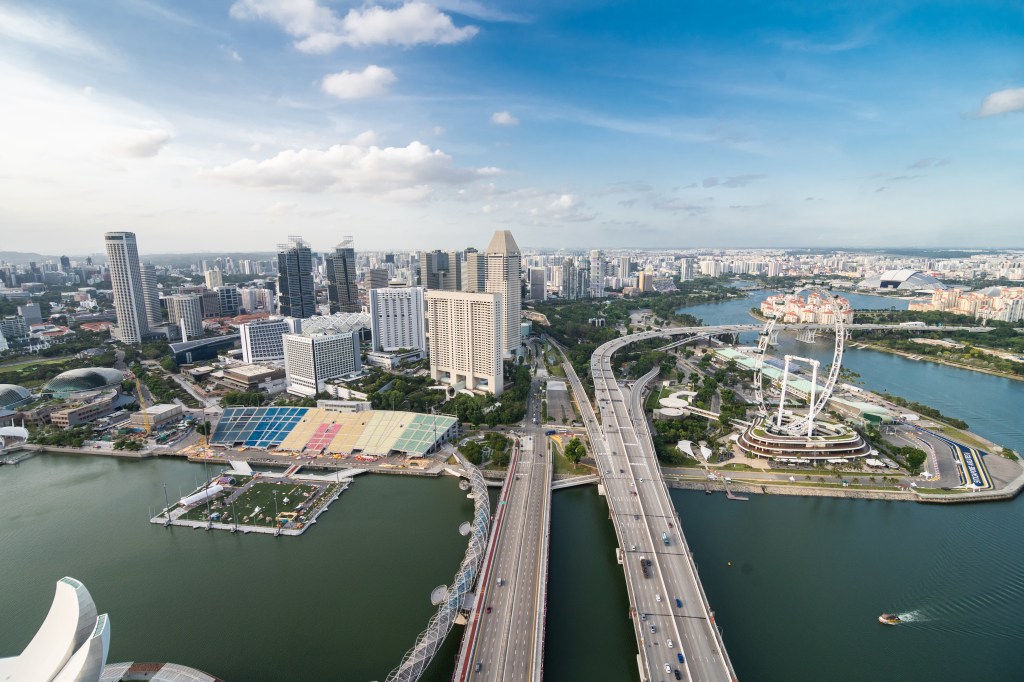
Susdev Group proudly presents “Learning from Singapore: Examining Models and Structures for Developing Public Transport Infrastructure.” This study explores the highly efficient public transport infrastructure of Singapore, aiming to learn and adopt its successful models and structures. By analyzing Singapore’s approach, the research seeks to provide actionable insights for improving public transport systems, enhancing connectivity, and promoting sustainable urban mobility.
A Model of Urban Transport: Singapore’s Success in Public Infrastructure
Singapore’s public transport infrastructure stands out for its efficiency, connectivity, and sustainability. Key models include the Bus Contracting Model (BCM) and highly integrated rail networks, complemented by Integrated Transport Hubs. These systems, managed by the Land Transport Authority (LTA), ensure high reliability, reduced waiting times, and extensive coverage. By adopting green practices and inclusive design, Singapore sets a benchmark for creating effective, sustainable, and user-friendly urban transport systems, with daily ridership exceeding 7 million passengers.
The public transport infrastructure of Singapore is renowned for its efficiency, connectivity, and sustainability. The Land Transport Authority (LTA) plays a crucial role in planning and managing the transport network, which includes buses, Mass Rapid Transit (MRT), Light Rail Transit (LRT), and taxis.
One notable model is the Bus Contracting Model (BCM), introduced in 2016. In this model, the government owns bus assets and infrastructure, while private operators run the services under contracts. This model ensures higher reliability and better service standards. For example, SBS Transit, SMRT Buses, Tower Transit Singapore, and Go-Ahead Singapore manage 14 bus packages, improving reliability, reducing waiting times, and incentivizing operators to invest in workforce training.
The rail network is designed for high integration, with seamless transfers between different lines and modes of transport. A prime example is the North-East Line (NEL) and the Downtown Line (DTL), two recent additions to the MRT network, enhancing connectivity across the city. The system features high frequency, extensive coverage, and reduced road congestion.
Integrated Transport Hubs are another key model. These hubs combine bus terminals, MRT/LRT stations, and other amenities in a single location, facilitating easy transfers and improving commuter convenience. The Woodlands Integrated Transport Hub (WITH) serves as a major interchange for buses and trains, enhancing connectivity, reducing travel times, and improving the commuter experience.
In terms of specific data, as of 2023, the daily ridership on Singapore’s public transport system exceeds 7 million passengers. The rail network spans over 200 kilometers, with 127 stations serving the city and its surrounding areas. The average waiting time for buses has been reduced to less than 10 minutes in most areas, thanks to the BCM.
Strengths and characteristics of this system include high efficiency, with frequent services and extensive network coverage ensuring quick and convenient travel. Sustainability is emphasized through green practices, such as electric buses and energy-efficient MRT systems. Inclusivity is also ensured through design considerations for accessibility, such as barrier-free access and facilities for the elderly and disabled, ensuring that the transport system serves all users.
Singapore’s public transport infrastructure serves as a model for other cities aiming to create efficient, sustainable, and user-friendly urban transport systems.






 Vertel Corporation
You must be logged in to post a comment.